Showing posts with label wordpress. Show all posts

Thursday, June 25, 2020

Web Scraping: Leave it All to AI or Add a Human Touch

What was once used by the US military as ARPANET (Advanced Research Projects Agency network) is today known as the Internet. With data grew from few gigabytes to 1.2 million terabytes today. In 1995 the internet was used by 16 million users. Today there are more than 4600 million users on internet and numbers are growing with each passing second. The last two years alone has made up for 90 per cent of the internet data today.  

This growth of internet users and their information has increased the data storage exponentially. Whatever you do on the internet, you will leave a digital trail. Even a random search by a random user will count in internet trend and affects the indexing of search engines. The data servers are now occupying space of football fields. Major companies like Google, Amazon etc are providing with cloud computing and cloud storage services to tap internet users’ data storage demand. With the need to store replicate data in case of natural catastrophe; more space is consumed by dedicated servers.

The surfing of the internet as much as it can be fun for regular users like us, for data scientists and businesses that desire some relevant information can become an uphill task. To find a needle in a haystack is easier than finding desired data on internet manually. The amount of data created and stored by a single large company is so vast that private data centres are employed. By this, we can envision how much data is available on the internet.

The role of data science, data mining and data scraping has increased tremendously. Web scraping services are used majorly for data extraction and data analysis. Web scraping is used for diverse purposes like business competition, research and analysis, consumer insights, security purposes, government purposes etc. 

What is Web Scraping?


what is web scraping

The extraction of data from websites is called web scraping or web harvesting. The specific data is copied from websites to local database or spreadsheet. Web scraping services or data scraping services use hypertext protocol or Extensible hypertext protocol for data extraction. The scraping can be done manually by visiting the particular page and copying data manually into a spreadsheet.

The manually scraping is possible when we are working for personal usage and data we are working with is limited. When we are dealing with a large amount of data an automated process is essential. It is implemented using a bot.

Web scraping and web crawling often mistaken for same but are different. Web crawling is done by search engines for indexing of hyperlinks, whereas web scraping does the data extraction. Web crawling is used in web scraping for fetching pages.

The websites now a day are highly advanced with using gifs, scripts, flash animations etc in an integrated ecosystem. Websites are developed, keeping human in mind, not bots therefore data extraction become a challenging task. The data extraction is based on the data stored by websites in text form. The mark-up languages such as HTML and XHTML are used for the development of a basic framework for any website. The specialised software use this rich text data for extraction. 

There are simple plug-ins such as Scraper, Data Scraper for Google chrome used for web scraping. There specialised software such as ParseHub, OutwitHub, etc employed for slightly advance level of web scraping. The major e-commerce companies such as Amazon and social networking companies such as Facebook provide their APIs (Application programming interface) for public data extraction. 
web scraping requiring inustrties

AI is a necessary evil in data scraping. The quantity of data has forced the implementation of AI. The AI as helpful it can be, unnerve people with wild sci-fi fantasy that pales the Matrix trilogy in comparison.


The legality of web scraping


“Just like the wild west, the Internet has no rules”. The times have changed in the wild west and on the Internet. The computer fraud and abuse laws criminalise any act of breaking into any private computer systems and accessing non-publically available data. In 2016 hiQ  Labs, a data science company web scrapped the publically available LinkedIn profiles. LinkedIn terms this as a violation of the company’s policy on data usage without permission and authorization. The hiQ took LinkedIn to court. In a landmark judgement for web scraping legality, the court ruled in favour of hiQ stating, “web scraping of public data is not a violation of computer fraud and abuse act.” 


The morality of web scraping


The web scraping is used in business for online price monitoring, price comparison, product review data. The real estate companies use it to gather competitor real state listing. The websites use other website public data for their convenience without having to work for it. The web scraping lies in the grey area of morality where few times its use cab be justified with internet policy and sometimes complete violation of basic internet ethics.  

If you are searching for cheaply available phones with a certain price range and use web scraping tool on a major e-commerce website for data extraction then it quite ethical and can be justified. When you extract data for a content-based site with its USP being uniquely available content such as blogging websites and created a mirror site then it cannot be justified.

A basic moral conscience is necessary for making a righteous judgment in the age of the internet where the lines are quite blurred.

Concept of the good bot and bad bot
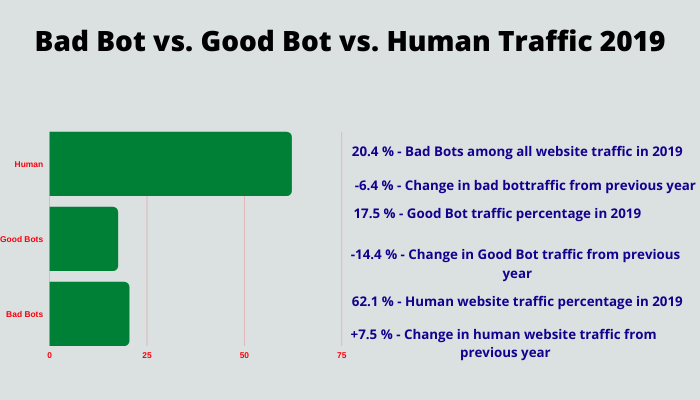

website traffic

The supporting of web scraping often linked with freedom of the internet and fair use of public data but the picture is not as rosy as it seems. There are many bad bots ie malicious automated software available which can steal data by breaking into user accounts, overload servers with providing junk data and harm websites.

The AI bot gets a bad reputation due to malicious bot crawling the internet space. Many websites prohibit web scraping. The websites use advance tools for bot detection and prevent them from viewing their pages. This solution to this is the use of DOM parsing, simulation of human behaviour etc to extract data from sites.

Does it require adding a magic touch?


artificial intelligence

We are leaving in the age of artificial intelligence. It is the intelligence demonstrated by machines. The machines are incapable of thinking by themselves. The highly complex software is used to develop machine intelligence that learns, adapt and collects data. The AI is now used in several areas from traffic regulation, pilot training in the aviation industry, critical fields such as nuclear reactors etc. The AI has made possible rooming of the rover on Mars. 

People are apprehensive of AI and believing a new world order where machine rules human. These make up for a good sci-fi script or story but the reality is too mechanical. AI has made it possible to work in an environment where humans could not survive. The sensitive area such as military, national security etc relies on AI for information processing. Human lives depend on AI proper working.

The internet is brimming with boundless data. The manual data extraction can be tedious in past but with data storage reaching in terabytes, it is nearly impossible. We have to implement AI for web harvesting and data mining services. The AI can extract store and process data from thousands of pages in a few seconds. The manual scraping does only a few hundred pages in days.  The AI has made it possible to scrape websites with a gigantic database and analyses it for forming business strategies and predictions. 

Does that mean the AI has replaced human in web scraping area at least? Well, the answer is not binary. The AI does a spectacular job in web harvesting but the human touch is indispensable. When data is extracted just like an ore is extracted. It has to go through various processes of floatation, smelting etc to be useful. The data gathered from the site could be repetitive, redundant and in the wrong format. When we are extracting this kind of data we are overloading storage with unnecessary data. Data verification and data scrubbing will cleanse the inaccurate and corrupt records from the extracted data. These are quite state of art tools but the ultimate power lies in the hands of a human.

The intelligence of the machine is called artificial for a reason. The AI extracting data cannot determine its necessity for a purpose like a human does. Let us suppose a company want to launch a new clothing line for teenage girls. They are extracting data for what teenage girls find fashionable. Many times websites want to remain on the forward listing of search engines pages and use the metadata incorrectly. The AI being AI will extract the data for teenage fashion and data will imply something else. 


Many websites prevent web crawling by using CAPTCHAS, embedding information in media objects, login access requirement, changing website HTML regularly etc. The AI right now cannot trespass these mechanisms of prevention of web scraping. 

In a situation like these, human touch became essential. As they say, “The artificial intelligence has the same relation to intelligence as an artificial rose is to real rose.”

Tuesday, April 14, 2020

What makes WordPress the best CMS for SEO?


Since its advent in the year 2003, WordPress has emerged as the topmost as the popular choice for the CMS. Several businesses are using it as a blog platform too. The WordPress 5.3 had more than 8 lakh download and now powers more than thirty-four per cent of the websites. The WordPress CMS has carved a niche for its own and gained ample credibility in digital marketing.  One of the many reasons behind its abundant popularity is its compatibility with SEO. Many SEO professionals and digital marketing agencies prefer WordPress. 

SEO is an acronym for SEO Engine Optimisation and an integral aspect of setting up a website, for, it is the technique that pushes a website further up in rankings. Using WordPress as the CMS ensures that you are already ahead of the curve in digital marketing. Let’s have a look at what makes WordPress the best CMS for SEO and a favourite among the SEO professionals out there.

Comprehensive HTML Markup


html and permalinks seo

WordPress comes with the readymade SEO booster package. While the CMS is written in PHP, it creates HTML pages for a website that are easy to navigate through by search engines.  Several latest frameworks bring forth the advantage of HTML5 that are easily accessible by the search engines. 

SEO-Friendly Beautiful and Catchy Permalinks


seo friendly permalinks

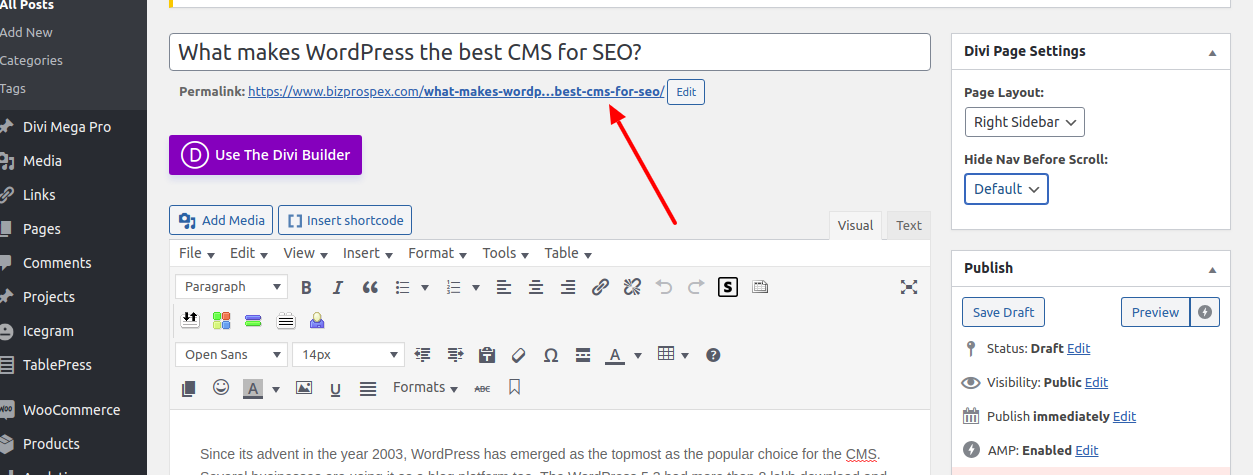
WordPress comes prepared with SEO permalinks. The permalinks are the links to the keyword-rich posts and pages and act as an indicator for the search engines. A permalink fulfils the user intent and lets a search engine know what the page is about. Besides, the WordPress settings allow you to modify a permalink and make it search engine friendlier. You can always edit it to insert a keyword of your choice and embed it into the URL.

Headings and Tags


The H1 tags and heading tags are one of the many SEO elements that make WordPress an SEO-friendly CMS. Apart from giving web content a much-needed structure, these tell the search engine what the page is about. And it is all automated! One doesn’t need to write HTML tags manually, reducing any chance of manual error and burden of work.

User-Friendly and Eye-grabbing Web Pages


Not only WordPress offers you plugins and themes that make for beautiful and attractive web pages, but also outstanding user experience. A WordPress website is easy to browse through and makes for a breezy experience for a user- resulting in lower bounce rates and improved SEO ranking. 

The themes are also power-packed with SEO elements. A digital marketing professional can choose from an array of WordPress themes that are available for different objectives, business and goals. Whether you want to set up a corporate blog for a data appending company or looking to set up an eCommerce website complete with payment options and live project tracking, there are plenty of themes to choose from! 

Irrespective of what your goal is, you can find a theme laced with proper HTML markup, basic technical SEO and professional presentation.  The UX of a WordPress site entices the user to stay for longer times and has reduced bounce rates, thereby addressing the nightmare of every SEO professional out there. 

Optimisation of Images for SEO


A picture is worth a thousand words and can also be an excellent tactic to fetch rankings. With WordPress CMS, the images can be optimised for size and title tags, leading to better rankings and search results. The Alt Text on images can be used to plug in relevant keywords, which are informative and lets the crawlers understand the content. WordPress Plugins can be used to create automated Alt Text for images, and you don’t need to do it manually! 

Images also give a proper structure to a web page, making the content readable and quite enjoyable to scroll through, leading to lesser bounce rates as well. 

We all know that Google absolutely hates slow websites.  Well, you don’t have to worry about it when you are using WordPress CMS. WordPress Websites load quick if they are configured correctly. Also, if you can resize the image sizes for better loading speed and performance of the website, several WordPress Plugin can compress the PDF documents and even older images to speed up your website. The CMS has also rolled up downloadable plugins to clear the website cache and clear the old database to reduce the loading time. 


Ease of Creation


WordPress started as a blog platform, and thankfully, it retains some of its former qualities even as a CMS.  The platform makes it easier for the content and SEO professionals to post content, structure it and embed multimedia content such as video and images. Besides, WordPress is absolutely breeze to set up. There are hundreds of themes available that can be customised or use as-is. 

You need no coding to enable most of its features on to the website. A person without any technical expertise can have a website up and running in no time!

SEO Plug-ins


WordPress has loads of plug-n-play SEO plugins to offer that make it a complete package for digital marketing ecosystem. The All-in-One SEO pack and Yoast SEO are the most common plugins used by bloggers. However, the versatility of WordPress SEO plugins goes beyond them.  

Yoast SEO


It gives you an automated, detailed purview of on-page SEO for web page content along with XML markup and robots.txt. It also gives you instructions (which you can follow or ignore) to improve the content and make it more SEO-friendly.  The Yoast SEO also offers insights into SEO title and meta descriptions. 

The WordPress CMS is also compatible with third-party tools such as Google Analytics and Search Console. 

Google XML Sitemaps


You can create search-engine-friendly XML sitemaps with this WordPress plugin. It will also notify the crawlers of newly published content on your website. 

Google Analytics


The Google Analytics plugin is any digital marketing professional’s dream come true. The WordPress dashboard has a detailed view of stats, traffic, clicks, bounce rate and geographical stats of your website right there! 

And this isn’t it! 

WordPress extends its ease of usability to other software tools as well. There is ConvertKit for email marketing campaigns and landing page and G-Suite for your emails and documents. 

The software tools for data mining and data appending can also be integrated with WordPress CMS easily.  


Optimised for Mobile


All of us prefer to search for on-the-go, read on our smartphones and even shop on our hand-held devices. But exactly how many CMS are mobile-centric. WordPress, however, definitely is. 

Here’s the industry-wise breakup of mobile-centric browsing and how much traffic industry is getting from a smartphone user. 

mobile optimizationreport


Since the web is accessed via smartphone more and more, Google also loves a mobile-friendly website – so much that the mobile-friendly websites have a competitive advantage and can redeem themselves in SERPs. The mobile-first indexing is for real, folks! 

However, WordPress is a step ahead here as well. It offers plugins like Jetpack for mobile indexing and to create a mobile-friendly version of an existing website. 

Comprehensive Security 


comprehensive security

Google blacklists more than 10,000 websites every day for malware, spamming and more than 10,000 websites for phishing. WordPress used to get a bad rap about its lax security practices, but not anymore. WordPress best security practices secure against the threats of malware and hackers. At the very core, the software is secure and regularly audited by the community of developers for any cracks. Also, you always have the WordPress Security team at your beck and call to guard you against security vulnerability. The team sends out security updates, which are applied to WordPress automatically to stay one step ahead. 

Apart from these, you have an array of WordPress security plugins that you can choose and integrate to your website. 

Social Media Compatibility


Social media has become an integral aspect of SEO. The boundaries are blurred, and social media platforms are increasingly utilised by digital marketing professionals to gain organic traffic. WordPress plugins such as SumoMe and Jetpack sharing can be used to integrate social media platforms such as Facebook, Twitter, Instagram and many more with your website. 

You can also integrate paid marketing campaigns with the website and track their progress through the dashboard. WordPress also lets you create personalised social media buttons to add that ‘zing’ factor to your blog. You can add social media feed to the home page of your website for more visibility. 

Developer Support


The WordPress community support is nothing short of astounding! The exorbitant community and support forums have your back in case you run into an issue. 

Conclusion:


WordPress and SEO go hand in hand. It is one of the best website platforms and CMS out there that is packaged with SEO-friendly tools, plugins and themes. Third-party software and tools for data mining, data scrubbing and email marketing can be easily integrated with the platform. The best part is that most of the plugins and SEO themes are available at no extra prices! Pretty good, don’t you agree?